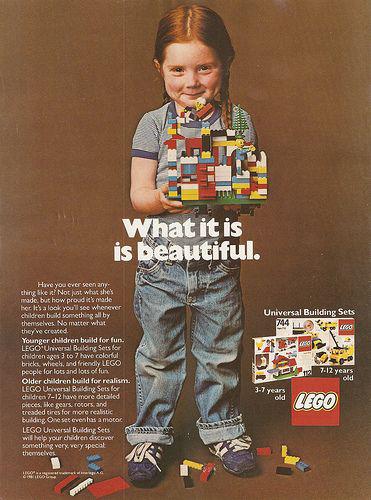
 This is how Lego advertised with girls in 1981.
Lego Is for Girls from Bloomberg Businessweek 12/14/2011 by Brad Wieners
Focusing on boys saved the toymaker in 2005. Now the company is launching Lego Friends for “the other 50 percent of the world’s children.” Will girls buy in?
…You could say a worn-out sneaker saved Lego. “We asked an 11-year-old German boy, ‘what is your favorite possession?’ And he pointed to his shoes. But it wasn’t the brand of shoe that made them special,” says Holm, who heads up the Lego Concept Lab, its internal skunkworks. “When we asked him why these were so important to him, he showed us how they were worn on the side and bottom, and explained that his friends could tell from how they were worn down that he had mastered a certain style of riding, even a specific trick.”
The skate maneuvers had taken hours and hours to perfect, defying the consensus that modern kids don’t have the attention span to stick with painstaking challenges, especially during playtime. To compete with the plug-and-play quality of computer games, Lego had been dumbing down its building sets, aiming for faster “builds” and instant gratification. From the German skateboarder onward, Lego saw it had drawn the wrong lessons from computer games. Instead of focusing on their immediacy, the company now noticed how kids responded to the scoring, ranking, and levels of play—opportunities to demonstrate mastery.

 INNOVATIVE LEARNING